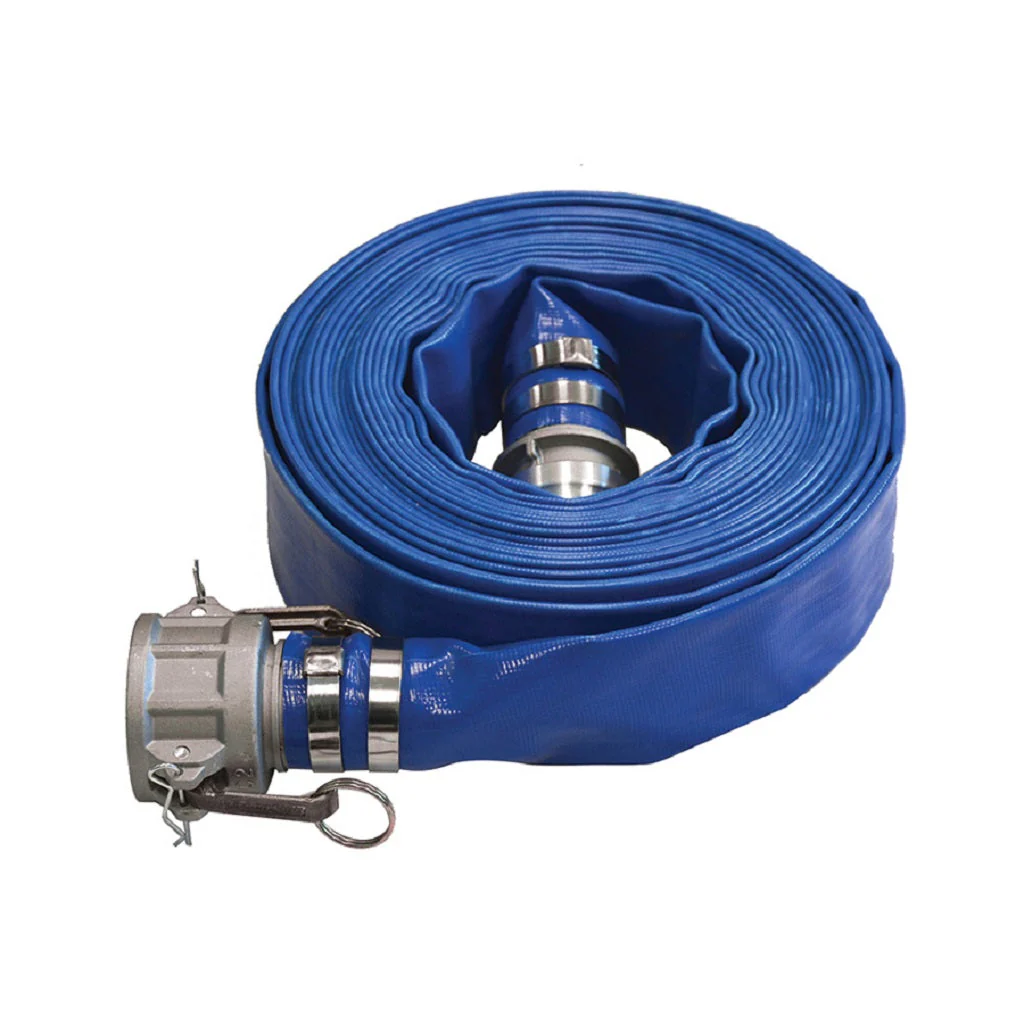
An industrial discharge hose plays a crucial role wherever large volumes of liquids, slurries or other flowable materials need to be moved efficiently and safely from one place to another. In many facilities, it is one of the unseen components that keeps operations running smoothly, supporting pumps, tanks and process equipment in handling demanding transfer tasks.
You may first need an industrial discharge hose when handling bulk fluids that must be offloaded from storage tanks, road tankers or intermediate containers. In such situations, a rigid pipeline may not be practical, either because the connection points move, space is limited or frequent reconfiguration is required. An industrial discharge hose provides a flexible link between the source and the receiving vessel, allowing operators to position equipment more easily and adapt to changing layouts. The hose needs to withstand the pressures generated by pumps, the weight of the fluid and the environmental conditions on site, while maintaining a secure, leak‑resistant flow path.
Another common need for an industrial discharge hose arises in dewatering and drainage work. Construction sites, quarries, mines and civil engineering projects often rely on pumps to remove accumulated water from excavations, tunnels or low‑lying areas. In these scenarios, an industrial discharge hose is used on the outlet side of the pump to carry water and suspended solids away to a safe discharge point. The hose must cope with abrasion from grit and small stones, as well as exposure to weather, rough handling and occasional kinking. Choosing the right industrial discharge hose helps ensure that dewatering operations remain reliable, preventing delays, instability or safety issues associated with standing water.
Wastewater and effluent management is another area where an industrial discharge hose becomes necessary. Many industrial and commercial processes generate dirty water, process effluent or cleaning solutions that must be collected and directed to treatment systems or suitable disposal points. A well‑specified industrial discharge hose allows this flow to be controlled and contained, reducing the risk of spills or uncontrolled releases. In food, chemical or manufacturing environments, the hose may need to handle specific temperatures, pH levels or chemical compositions, so the material of construction for the industrial discharge hose must be selected carefully to avoid degradation and contamination.
In bulk material handling, an industrial discharge hose can play an important role when dealing with slurries or liquids carrying fine particles. When materials with difficult flow properties are mixed with water or other carriers, they can form dense mixtures that are challenging to move through rigid pipework. A suitably reinforced industrial discharge hose can handle the combination of solid and liquid, absorbing movement and vibration from pumps while resisting wear from abrasive particles. This is especially relevant in industries such as mining, mineral processing and certain areas of agriculture, where slurries need to be transported between tanks, ponds and processing units.
You may also require an industrial discharge hose during cleaning, flushing or wash‑down operations. Many facilities need to periodically flush pipes, tanks or production lines with water or cleaning agents to remove residues and maintain hygiene or product quality. In such cases, an industrial discharge hose is used to route the used cleaning liquid to drains, sumps or treatment equipment. A hose with suitable flexibility allows operators to reach confined or awkward spaces while still maintaining control over where the liquid is discharged. Because cleaning cycles can be frequent, the durability and ease of handling of the industrial discharge hose have a direct impact on efficiency and operator comfort.
Emergency situations are another time when an industrial discharge hose becomes critical. In flood response, fire‑fighting support or spill containment efforts, quickly deploying pumps and hoses can prevent more serious damage. An industrial discharge hose can be rolled out, connected and used to move large volumes of water or contaminated liquids away from vulnerable areas. Its ability to be stored compactly and then rapidly deployed is particularly valuable in these scenarios, where permanent piping cannot provide the necessary flexibility or reach. Here, the reliability of the industrial discharge hose under pressure and repeated use is vital to effective emergency response.
In mobile and temporary installations, an industrial discharge hose is often the only practical option for fluid transfer. Events, remote worksites, temporary processing plants and seasonal operations may not justify permanent pipework. Instead, pumps and tanks are connected by hoses that can be set up and dismantled as needed. In this context, an industrial discharge hose must be both robust and easy to handle, capable of withstanding repeated deployment, coiling, transportation and storage. Its performance directly influences how quickly a temporary system can be brought online and taken down again when the work is complete.
Temperature and environmental conditions can also dictate when an industrial discharge hose is needed. Some processes involve hot water, mildly heated chemicals or fluids that must be kept within certain temperature ranges. A correctly rated industrial discharge hose can tolerate these conditions without softening, cracking or losing strength. In outdoor settings, hoses may be exposed to sunlight, ozone, cold temperatures and mechanical stress, all of which must be considered when selecting materials and reinforcement. The right industrial discharge hose allows safe operation despite these challenges, while an unsuitable hose may fail prematurely or pose safety risks.
In many industries, space constraints and complex layouts are another reason to choose an industrial discharge hose over rigid alternatives. When equipment is crowded into compact rooms, or when access routes need to remain clear for people and vehicles, flexible connections offer a practical solution. An industrial discharge hose can be routed around obstacles, curved gently to fit available paths and disconnected when not in use to free space. This adaptability helps designers and operators to optimise layouts for both production and safety, without being constrained by fixed pipe runs in every location.
An industrial discharge hose is also valuable when dealing with materials that may settle or solidify if left static. Certain slurries, suspensions or viscous liquids need to be moved efficiently to prevent blockages or deposits forming in lines. The internal surface and flexibility of an industrial discharge hose can reduce areas where material might stagnate, and the hose can be drained or flushed more easily between uses. For processes where frequent changeovers or cleaning are required, this can make a significant difference to uptime and maintenance effort.
In addition, you might need an industrial discharge hose when connecting different systems that operate at varying pressures or require vibration isolation. Pumps, engines and other rotating equipment can introduce movement and stress into rigid pipework, leading to fatigue, leaks or noise issues. An industrial discharge hose can absorb some of that movement, acting as a flexible joint that protects both the equipment and the rest of the system. In this way, it contributes not only to safe fluid transfer but also to the longevity and reliability of connected plant.
From a safety perspective, using an appropriate industrial discharge hose can help control where fluids go and how they are contained. In many workplaces, there are strict requirements about keeping walkways clear, preventing uncontrolled run‑off and avoiding contact between incompatible substances. By routing flow through a secure industrial discharge hose to the right drains, tanks or treatment units, operators reduce the likelihood of slips, contamination or reactions between different materials. When combined with proper couplings and supports, the hose becomes an integral part of a safe system of work.
Energy efficiency and process performance can also be influenced by the choice of industrial discharge hose. Excessive friction losses, kinks or restrictions in the hose can force pumps to work harder, increasing energy use and wear. Selecting a hose with an appropriate diameter, internal finish and reinforcement helps maintain smooth flow and consistent discharge rates. Over time, this contributes to more predictable process conditions and can reduce operating costs. The right industrial discharge hose therefore supports both environmental and financial objectives.
In summary, you may need an industrial discharge hose in a wide variety of circumstances: whenever fluids or slurries must be moved flexibly and safely, where rigid pipework is impractical or too inflexible, where dewatering, wastewater handling, cleaning, emergency response or temporary installations are involved, and where vibration, temperature or environmental conditions demand a robust yet adaptable connection. Understanding these situations helps in specifying an industrial discharge hose that not only meets immediate needs but also supports long‑term reliability, safety and efficiency across diverse industrial settings.


