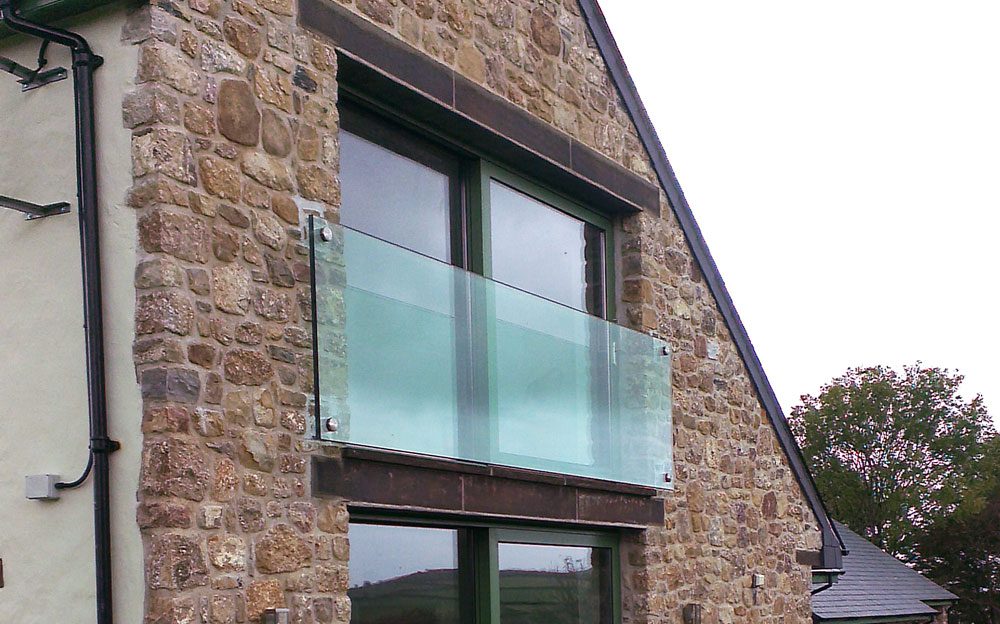
In the world of architecture and interior design, the pursuit of minimalism, light, and an uninterrupted connection with the outdoors has become a defining characteristic of modern living. This philosophy seeks to remove visual clutter, favouring clean lines and transparent materials to enhance the sense of space and wellbeing. It is within this context that the concept of the Juliette balcony has been reimagined, evolving from its traditional, often ornate, form into something altogether more ethereal and sophisticated: the frameless Juliette balcony. This architectural feature represents a perfect synthesis of safety, engineering, and aesthetic purity, offering a solution that is both profoundly practical and visually stunning.
At its core, a Juliette balcony is not a balcony in the conventional sense where one can step out and sit. Instead, it is a safety barrier installed across a full-height opening on an upper floor, such as in front of inward-opening French doors or large tilt-and-turn windows. Its purpose is to allow for the creation of a large aperture that floods a room with natural light and fresh air, without the risk of falling. The name, of course, evokes the iconic scene from Shakespeare, but its modern application is far more about architectural function than romantic drama. While traditional designs often featured metal railings, spindles, or grilles, the contemporary drive for unobstructed views has championed a new approach.
The defining feature of frameless Juliette balconies is their masterful illusion of near-invisibility. By eliminating the structural frame, top rail, and vertical posts that characterise other systems, they present a single, seamless sheet of structural glass as the sole barrier between the interior and the exterior. This creates a powerful architectural statement, one that prioritises the view above all else. The landscape, whether it be a bustling city street, a tranquil garden, or a dramatic coastline, becomes an integral part of the room’s decor, framed only by the building’s aperture itself. This approach fundamentally changes the dynamic of a space, making it feel larger, brighter, and more intrinsically linked to its surroundings.
The engineering behind these seemingly simple glass panels is, however, highly sophisticated. To achieve a secure and rigid barrier without a surrounding frame, the glass itself must perform the entire structural duty. This is achieved through the use of specialised safety glass, which is significantly thicker and stronger than standard glazing. Typically, this involves either toughened (or tempered) glass, laminated glass, or a combination of both. Toughened glass is subjected to a process of extreme heating and rapid cooling, which makes it four to five times stronger than ordinary glass. Laminated glass consists of two or more sheets of glass bonded together with a clear interlayer, usually of polyvinyl butyral (PVB). In the event of a severe impact causing breakage, this interlayer holds the shattered fragments in place, maintaining a barrier and preventing dangerous shards from falling. The use of toughened and laminated glass in frameless Juliette balconies ensures they provide an exceptional level of safety that meets and often exceeds stringent building regulations.
The method of fixing these glass panels to the building is critical to their frameless appearance and structural integrity. One of the most popular methods involves the use of side-fixings, often referred to as ‘stand-offs’ or ‘bosses’. These are discrete circular discs of high-grade stainless steel that are bolted through pre-drilled holes in the glass and anchored securely into the building’s structural substrate. The result is a glass panel that appears to float in front of the opening, with only the minimal gleam of the metal fixings to betray its presence. The choice of stainless steel grade, such as 316 marine grade, is important for ensuring long-term resistance to corrosion and weathering, especially in coastal or heavily polluted environments.
An alternative mounting system for frameless Juliette balconies utilises a structural base channel. In this design, the bottom edge of the glass panel is secured within a narrow, heavy-duty U-shaped channel that is fixed to the floor or sill of the opening. For the ultimate minimalist aesthetic, this channel can be recessed into the floor structure, making the fixing completely invisible and creating the impression that the glass rises seamlessly from the floor. This method can also be applied to the sides of the opening, gripping the vertical edges of the glass. Both side-fixings and channel systems are engineered to withstand significant loads, ensuring the balcony is a robust and reliable safety feature.
The benefits of installing frameless Juliette balconies extend far beyond their visual appeal. From a practical standpoint, they are remarkably low-maintenance. A single, flat pane of glass is far easier to clean than a complex arrangement of railings and spindles, which can trap dirt and be awkward to access. This simplicity contributes to the longevity of their pristine appearance. Furthermore, by maximising the amount of natural light entering a room, they can help to reduce the need for artificial lighting, contributing to energy efficiency and creating a more pleasant and healthier indoor environment. The psychological impact is also significant; the sense of openness and the uninterrupted views can have a calming effect and alleviate the feeling of being enclosed, which is particularly valuable in smaller urban apartments.
When considering the installation of frameless Juliette balconies, several key factors must be taken into account. The first and most important is compliance with building regulations. In the United Kingdom, for instance, Part K of the Building Regulations (Protection from falling, collision and impact) dictates the required height of the barrier and its ability to withstand specific forces. A professional installer or structural engineer must ensure that the chosen system, including the glass specification and fixings, is fully compliant. The specification of the glass itself is a critical decision. Factors such as the width of the opening will influence the required thickness of the glass to ensure it does not flex unduly under load. For wider spans, a thicker laminated panel is often necessary. A further consideration is heat-soak testing, a process that can be applied to toughened glass to significantly reduce the risk of rare but possible spontaneous fracture due to nickel sulphide inclusions.
The nature of the building’s wall construction, or substrate, is equally vital. The fixings for the balcony must be anchored into a solid structural element, not just surface cladding or plasterboard. Different anchoring solutions are required for masonry, blockwork, or a timber-framed structure, and a structural assessment is often required to confirm the wall’s capacity to handle the imposed loads. For this reason, the installation of frameless Juliette balconies is not a task for the amateur DIY enthusiast; it demands the expertise of specialist fitters who understand the structural mechanics and regulatory requirements.
In terms of architectural integration, the versatility of frameless Juliette balconies is one of their greatest strengths. In a new-build contemporary home, they are a natural fit, complementing the clean lines and expansive glazing that often define modern design. However, they can also be used to great effect in the renovation of older or period properties. The juxtaposition of a sleek, minimalist glass barrier against traditional brickwork or stonework can create a compelling and beautiful contrast, breathing new life into a historic building without compromising its original character. They allow for the upper floors of older homes, which often have smaller windows, to be opened up to the light and views in a way that is sensitive and respectful to the existing architecture.
Ultimately, the choice to incorporate frameless Juliette balconies into a building’s design is a choice for clarity, light, and modern elegance. They are a testament to how advancements in glass technology and engineering can be harnessed to create features that are simultaneously functional and beautiful. They dissolve the boundary between inside and out, transforming a simple window opening into a panoramic vista. By providing safety without a visual penalty, they allow us to fully embrace the potential of our living spaces, making them feel more expansive, more connected, and more filled with the life and light of the world outside. They are more than just a safety feature; they are an architectural enhancement that elevates the experience of a home.


