In this day and age, where mishaps in the workplace may quickly become more serious, it is essential for both individuals and businesses to have a solid grasp of what professional fire safety training comprises. Through participation in this specialist kind of education, participants are provided with the information and skills necessary to avoid, respond to, and minimise hazards associated to fire disasters. The training of fire safety personnel is not only a compliance exercise; rather, it is an essential investment in the protection of both lives and property. Professional fire safety training often lasts for a whole day or longer, depending on the level of the course, and includes a wide range of topics covering anything from fundamental fire dynamics to sophisticated evacuation methods. The training is delivered by licensed instructors. It is possible for participants to expect a combination of theoretical sessions and hands-on exercises that are aimed to create confidence in situations that are typical in the real world. Fire safety training ensures that everyone knows their part in creating a safer environment, whether you are an employee attending mandated sessions or a manager organising training for your team.
For the purpose of addressing the diverse character of fire threats, the framework of professional fire safety training has been thoroughly prepared. It is common practice to begin sessions with an introduction to fire science, which includes an explanation of how fires start, how they spread, and how they may be put out. The fire triangle, which consists of fuel, oxygen, and heat, is a fundamental concept that is emphasised by instructors in the context of fire safety training. Prepare yourself for engaging discussions on typical ignition sources, such as electrical faults or flammable materials, and how they are ubiquitous in a variety of contexts, such as offices, industries, or public buildings. It is crucial that participants have this theoretical basis because it enables them to detect possible risks before they become emergencies. By delving into the legal duties that are imposed by UK rules, fire safety training ensures that participants have a solid understanding of the reasons why such preparedness is non-negotiable. By the time the introductory phase is over, students should have a sense of having gained knowledge about the larger context, which will prepare them for the subsequent sections that are more practical.
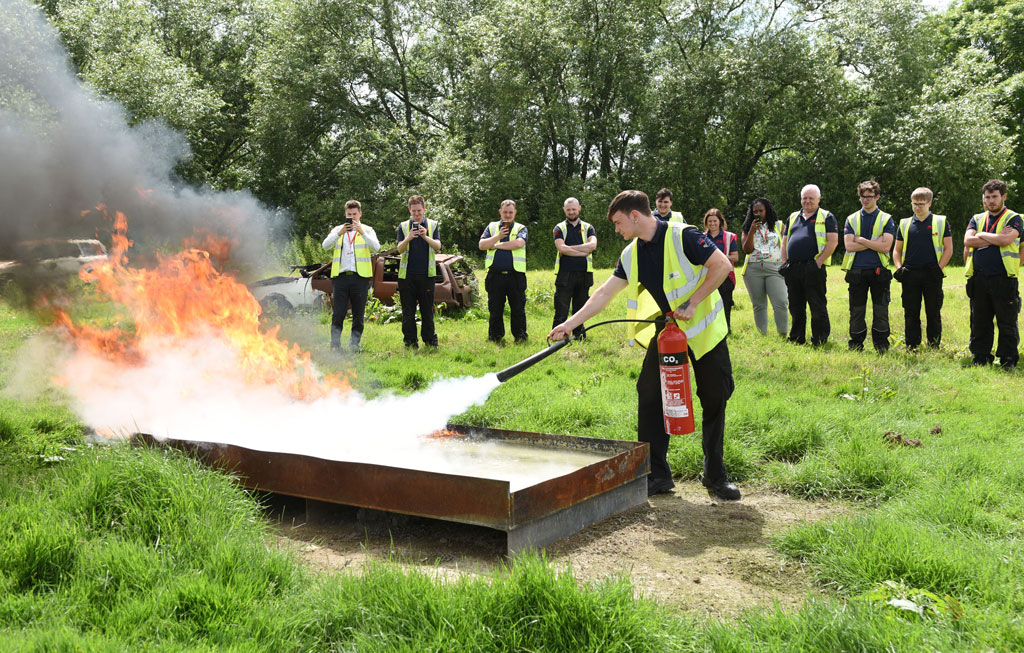
The most important component of what makes professional fire safety training so effective is the use of hands-on practice. In order for participants to have first-hand experience with the issues of heat and visibility, it is probable that they may participate in simulated exercises that include smoke machines or controlled fire pits. Using fire extinguishers is a significant feature, as it teaches trainees how to recognise different types of extinguishers, such as water, foam, CO2, or powder, and how to use the PASS technique, which consists of pulling the pin, aiming at the base, squeezing the handle, and sweeping from side to side. Muscle memory is developed through this practical component of fire safety training, which also helps to lessen terror during actual events. You should anticipate actions that involve groups and replicate alarm responses, such as following authorised escape routes or providing assistance to those who are susceptible. The instructors offer rapid feedback and right approaches in order to guarantee that the actions involved are both safe and effective. These simulations are calibrated to mimic real pressures without genuine risk, allowing participants to develop competence in a supportive atmosphere.
A professional fire safety training program places a focus on human issues, particularly the psychological aspects of emergency situations, in addition to technical abilities. Case studies from past fires in the United Kingdom are used to demonstrate the lessons learnt throughout the sessions about why individuals freeze or make mistakes when they are under stress. This location provides training on fire safety, which includes instruction on communication tactics such as clearly warning people or collaborating with emergency services. In order to cultivate leadership characteristics, role-playing situations may entail directing a team evacuation or resolving false alarms. Because it emphasises the obligation to keep things peaceful and in order, this facet is especially helpful for individuals who are in supervisory responsibilities. On a regular basis, trainees engage in self-reflection, reviewing home fire safety guidelines that are complementary to workplace fire safety training. To guarantee that fire safety training is not only a procedural exercise but rather a transforming one, the emotional resilience that is developed through these sessions is essential.
The assessment process is an essential component of professional fire safety training. It serves to verify that the acquired information and skills are retained and applied effectively. The majority of classes consist of written tests on fire rules and danger identification, which are then followed by practical demonstrations in which participants are required to put out a tiny fire or perform an escape exercise while being timed. The teachers provide feedback that is positive, addressing any areas of weakness in order to support learning. Attendees gain certification upon successful completion of the course, which is normally valid for three years in the UK. In order to maintain their certification, attendees are required to undergo further fire safety training. Participant motivation is increased by this review procedure, and employers are given the certainty that they are in compliance. Certification in fire safety training is a visible product that is frequently presented in businesses to indicate a dedication to safety.
The setting is inviting and inclusive, and it is designed to suit a wide range of learners. This is especially helpful for those who are new to professional fire safety training. When it comes to specific applicability, courses are occasionally given on-site, but they are often hosted in specialised facilities that are outfitted with audiovisual aids and safe training props. The active character of fire safety training is reflected in the dress rules, which are practical and consist of the wearing of comfortable clothing and strong shoes. In order to avoid becoming fatigued, breaks are planned, and nutritional requirements are taken into consideration for longer sessions. To ensure that everyone is able to benefit from fire safety training, inclusivity is emphasised, and accommodations are made for those with impairments. There is a natural occurrence of possibilities for networking as participants from a variety of sectors share their thoughts, which enriches the experience everyone has together.
Beyond the confines of the classroom, there are several advantages to participating in professional fire safety training. Individuals acquire a sense of empowerment when they realise they are capable of efficiently responding to dangers, which in turn enhances their overall confidence. Because proactive fire safety training cultivates a culture of awareness, organisations experience lower insurance rates and fewer interruptions as a result of occurrences. The increased morale of employees, who are made to feel appreciated as a result of such expenditures, is another factor that leads to a more productive workplace. Training in fire safety eventually saves lives by reducing the amount of time it takes to respond to emergencies and the number of mistakes that are made.
One further essential requirement for professional fire safety training is customisation, which enables the training to be tailored to the particular requirements of the given industry. On the other hand, building sites may place a greater emphasis on the dangers associated with temporary structures, while hospitality locations may prioritise the evacuation of guests. When it comes to fire safety training, this individualised training provides relevance by addressing specific threats such as chemical storage or escapes from high-rise buildings. By incorporating participant input into the content of the courses, instructors are able to make them more dynamic and engaging. It is possible to scale professional fire safety training successfully, ensuring that high standards are maintained across a variety of scenarios, whether it be for smaller groups or larger cohorts.
In order to reinforce the principles learned during fire safety training, post-training support is frequently offered. The maintenance of knowledge is facilitated by follow-up materials, which may include manuals or online refreshers. The integration of fire safety training into ongoing safety measures is something that many programs urge; these exercises are held annually to keep skills current. This method has a long-term perspective, which helps to minimise complacency and ensures that fire safety training is properly implemented into routine habits.
The conclusion is that professional fire safety training is an enlightening journey that incorporates teaching, practice, and assessment in order to build readiness. Through the acquisition of knowledge ranging from the principles of fire to the usage of extinguishers and evacuation strategies, participants emerge with the ability to manage situations with calm. In addition to the fact that it is both legally and practically beneficial, fire safety training is an invaluable resource due to the fact that it is both inclusive and practical. In addition to satisfying the requirements of the regulatory bodies, people and organisations that make investments in such programs are also able to advocate for a preventative approach to fire hazards. The adoption of fire safety training is a step toward a safer tomorrow, one in which knowledge and action come together to preserve what is most important.


