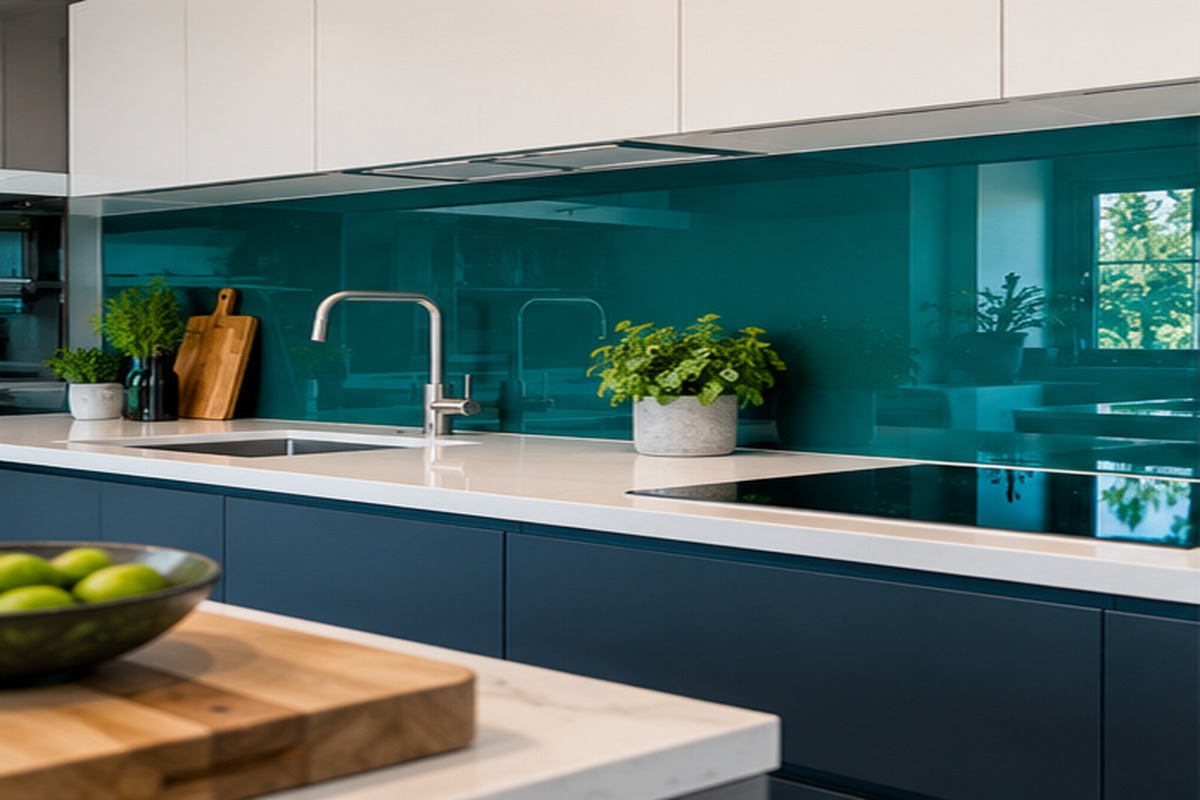
There comes a point when even a perfectly functional kitchen can start to feel a little dated. The cupboards are still in good condition, the appliances work and there’s nothing particularly wrong with the layout. Yet something about the room no longer feels quite right. Perhaps the colours have become tired, or the original design simply doesn’t reflect the homeowner’s tastes anymore.
Replacing an entire kitchen to solve these problems can be expensive and disruptive. Fortunately, there are other ways to change the appearance of a room without removing perfectly serviceable fittings. Painting the walls, updating cabinet handles and changing the lighting can all help, but introducing colour behind the worktops can have an equally noticeable effect.
One option worth exploring is installing colour glass splashbacks from Direct Splashbacks. The company supplies made-to-measure toughened glass in a wide selection of finishes, allowing homeowners to introduce a new colour scheme while retaining their existing kitchen units. With online quotations and ordering available, it’s possible to plan this type of improvement without committing to a complete renovation.
Why Colour Makes Such a Difference in a Kitchen
Colour influences how we perceive a room. It can make a kitchen feel warmer, brighter, calmer or more contemporary, depending on the shades selected and how they interact with the surrounding materials.
A kitchen dominated by white cabinets and pale worktops, for example, might benefit from a stronger colour to provide contrast. Without it, the room can sometimes appear rather plain, particularly when there are few decorative features.
Introducing a deep blue, green or charcoal finish behind the worktop can give the space a more defined appearance. The new colour becomes part of the overall design rather than simply another wall covering.
Alternatively, a kitchen with dark cabinets may benefit from lighter tones that prevent the room from feeling too enclosed.
The important consideration is balance. A colour should work with the existing fittings rather than compete with them, especially when the cupboards and worktops aren’t being replaced.
Creating a Feature Without Overwhelming the Room
Not every kitchen needs a dramatic colour scheme. In fact, some of the most effective improvements involve introducing a relatively small amount of colour in the right place.
The area directly behind the hob is particularly suitable for this approach. A single coloured glass panel can create a focal point without requiring changes to the surrounding walls.
This works especially well in kitchens where the hob is positioned centrally between wall cabinets or beneath an extractor hood. The splashback naturally occupies a prominent position, allowing it to contribute to the room’s appearance without additional decoration.
For homeowners who prefer a more coordinated finish, coloured panels can extend along the worktop and underneath the wall units.
The advantage of colour glass splashbacks is that they can be used in either arrangement. A small installation can introduce a decorative accent, while a larger area of glass can establish a consistent colour scheme throughout the kitchen.
Both approaches have their merits, and the right choice depends on the available wall space and the effect the homeowner wants to achieve.
Choosing Colours to Work With Existing Cabinets
When planning a kitchen refresh, the existing cabinet colour is usually the best starting point.
White and cream units offer considerable flexibility because they work with many different shades. Strong colours can create contrast, while muted tones produce a softer appearance.
Grey cabinetry is equally versatile, although the particular shade of grey makes a difference. Warm greys often work well with earthy colours, whereas cooler greys can complement blues and greens.
Natural wood introduces another consideration. The grain and tone of the timber already contribute visual interest, so a carefully selected splashback can help bring the different materials together.
For darker cabinets, homeowners may wish to consider whether they want contrast or continuity. A lighter colour can help break up large areas of dark cabinetry, while a matching deep shade can create a more uniform appearance.
It’s also worth remembering that colours can look different under artificial lighting. A shade that appears subtle in daylight may seem warmer or more intense beneath kitchen spotlights.
Viewing samples in the room, where available, is a sensible way to assess how a particular colour will interact with the existing surfaces.
Using Colour to Influence the Atmosphere
Different colour families can help establish a particular character within the kitchen.
Soft greens, for example, are often associated with natural interiors and can work well alongside wooden worktops or neutral cabinets. They provide colour without necessarily becoming the dominant feature.
Blues offer considerable variety, from pale shades suited to brighter interiors to deeper tones that create a stronger contrast against white or cream units.
Warm colours such as terracotta-inspired shades can complement traditional kitchens, particularly where natural materials are already present.
Neutral colours shouldn’t be overlooked either. Beige, grey and off-white finishes can give an older kitchen a more coordinated appearance without introducing an entirely new colour palette.
For homeowners considering colour glass splashbacks, the decision should be based on more than current interior design trends. A shade that complements the kitchen’s permanent features is more likely to remain appealing as decorative preferences change.
The Appeal of a Smooth, Uninterrupted Finish
Colour isn’t the only reason to consider glass when updating a kitchen.
Traditional tiled splashbacks can look attractive, but the individual tiles and grout lines introduce a pattern of their own. This can affect how a colour is perceived, particularly when the tiles are small or arranged in a decorative layout.
A continuous glass panel creates a different effect. The colour is presented across a smooth surface, without the interruptions associated with conventional tiling.
This makes the finish particularly suitable for kitchens where the homeowner wants a clean, relatively simple appearance.
The reflective qualities of glass can also influence the result. Depending on the selected finish and the surrounding lighting, the surface may help distribute light and add visual depth.
These characteristics make coloured glass an interesting option for kitchens that need refreshing but don’t necessarily require additional decorative features.
Made-to-Measure Glass for Individual Kitchens
One difficulty with updating an existing kitchen is that the available wall space may not correspond to standard product sizes.
Cabinets might have been fitted around unusual dimensions, sockets may be positioned close to the worktop, or the room itself could have an irregular layout.
Made-to-measure products help address these challenges by allowing panels to be manufactured according to the required dimensions.
Direct Splashbacks specialises in bespoke toughened glass, giving customers the opportunity to order panels designed for their particular kitchen.
Accurate measurements remain essential, especially where electrical sockets or other openings need to be accommodated. Toughened glass cannot be cut or drilled after manufacture, so any required cut-outs must be specified beforehand.
The company provides measuring guidance to assist customers with this stage of the process.
For homeowners who want to install colour glass splashbacks without replacing their cabinets, this flexibility is particularly useful. The new panels can be planned around the existing layout rather than requiring extensive alterations to accommodate standard-sized materials.
A Practical Choice for Everyday Cooking
A kitchen improvement should make the room more enjoyable to use, not introduce unnecessary maintenance.
Glass offers practical advantages in this respect because its smooth, non-porous surface is generally straightforward to clean.
Cooking splashes, grease and everyday marks can usually be removed using a soft cloth and an appropriate cleaning product. Unlike tiled surfaces, there are no grout lines running across the panel that require separate attention.
This can be especially convenient around the hob, where cooking residue tends to accumulate.
Toughened glass also provides greater strength and resistance to thermal stress than ordinary glass. Nevertheless, homeowners should follow the relevant installation guidance and check any clearance requirements specified by their hob manufacturer.
These practical considerations are important because a decorative finish needs to remain suitable for its intended position.
A carefully chosen splashback can therefore contribute to both the appearance and everyday usability of the kitchen.
Refreshing the Kitchen on a More Manageable Budget
Replacing a complete kitchen can involve substantial expenditure on cabinets, worktops, appliances, plumbing and installation.
Even a relatively straightforward renovation may require several tradespeople and leave the room temporarily unavailable for normal use.
By comparison, retaining the existing fittings and concentrating on selected decorative improvements can be a more manageable approach.
Changing the splashback, repainting suitable surfaces and updating cabinet handles may be enough to give the kitchen a different character.
The exact cost will depend on the size of the installation and the finish selected, but focusing on one area allows homeowners to make improvements without automatically committing to a complete refurbishment.
Direct Splashbacks provides instant online quotations, making it possible to assess the cost of made-to-measure glass before placing an order. The company also offers free tracked delivery across mainland UK.
For those exploring colour glass splashbacks as part of a kitchen refresh, this makes it easier to consider different options and establish a realistic budget.
Small Changes Can Produce Lasting Results
A successful kitchen makeover isn’t necessarily measured by how much has been replaced. Sometimes, retaining the existing fittings and making a few carefully considered improvements produces a more satisfying result.
Colour is particularly effective because it can change the character of a room without altering its layout. A previously plain kitchen can feel more distinctive, while an older colour scheme can be updated to better reflect the homeowner’s preferences.
The wide choice of finishes available from Direct Splashbacks gives homeowners flexibility to explore these possibilities, whether they prefer something subtle or want to introduce a stronger decorative feature.
Ultimately, colour glass splashbacks offer a practical way to bring new life to an existing kitchen. With the right shade, accurate measurements and a finish that complements the surrounding materials, it’s possible to achieve a noticeable improvement without the expense and disruption of replacing the entire room.
Get in Touch:
Direct Splashbacks
United Kingdom
[email protected]
directsplashbacks.com


